
When we had been living in our house for a few years, our next door neighbor greeted me over the fence, Wilson Wilson style. “Did you know you had a skunk living under your front porch?”
No, I didn’t. But we smelled skunk with some regularity, so it didn’t surprise me.
When I was a kid, we had a skunk living under our front porch. It was a white skunk with a black stripe, which was in keeping with my need to be different. So I was a little enchanted to find that as an adult with my own home (a bungalow very like the one I lived in growing up) that I also had a skunk living under my porch.
I identified where the skunk was going in and out. We saw it snuffling around the backyard a few times after dark. Early one morning, I discovered that there were two skunks, one mostly black, and one mostly white (fantastic!). One of them and I had a very uncomfortable stand off, with tail raised on its part and terror on mine, before we were finally able to break the tension and make a run for it.
I’ve been on a bit of a quest lately to collect magical moments. A dear friend suggested that I be a little more open-minded about what those moments look like, and I took her advice. This open-mindedness means looking for adventure, and saying yes more often.
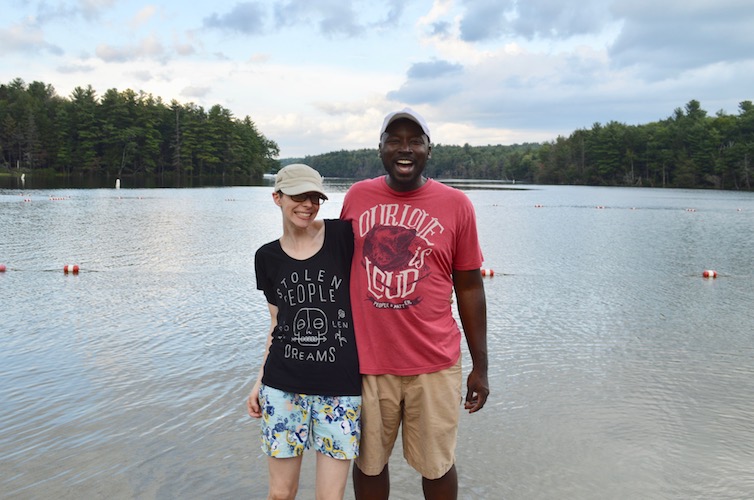
Last night, we went to Grafton Lakes State Park. It’s just a tiny bit longer than I like to drive, but it was the last day of summer vacation while also being the first day of school (since we homeschool, we can have our cake and eat it, too). The day called for a special ending.
Several years ago, the Chaplain and I watched a documentary about parrots that was equal parts fascinating and disturbing.
What stuck with me was what the documentary had to say about the nature of parrots. In the wild, they mate for life. When they live solitary lives with humans, they attach themselves to their owners and rely on them not only for food and shelter, but also the attention and affection they would normally get from their mates in their natural habitat.
As it turns out, humans make crappy mates for parrots. We are fickle, have short attention spans, and I suppose, a low tolerance for squawking. And when parrots rely on humans for needs they should be having met by another parrot, they are disappointed. In the face of this, they can begin to turn to self-destructive behavior. They act out in the face of grief at their unmet needs. I’m not pretending parrots have the full range of emotions. But seeing parrots who had plucked half their feathers out in frustration and anger, covered with scabs from self-inflicted wounds, it was clear they were feeling something.
I was reminded of this misplaced need earlier this summer when I stopped at a rest stop on the long drive home from Pennsylvania after visiting family.
When we moved to Albany at the beginning of our marriage, I didn’t want to volunteer how long the Chaplain and I had been married. I had graduated from college with a degree in English and a little boy; if I didn’t tell people we met that we’d just gotten married a year ago, they could think the Chaplain was One’s biological dad.
I was crushed by shame, and I thought I needed to do damage control on the genesis of our little family.
Today, we’re celebrating twelve years of marriage, and I’m proud of that number. Acting out a certain story, an “acceptable” one, doesn’t seem that important anymore.
The Chaplain and I finally started earning our marriage chops this year. We had to work for it. It was in turns terrifying and wonderful. I shudder to think what our next challenge might look like in a partnership where we traditionally do things big.
This morning, I’m feeling grateful that we made it. Before, we would never have used the term “we made it,” about our relationship. It was saved for trivial stuff like getting to somewhere on time.
But we did make it. And I’m seeing things differently, communicating differently, loving and trusting differently. It’s a good thing. And I’m interested to see what Year Thirteen has to offer.
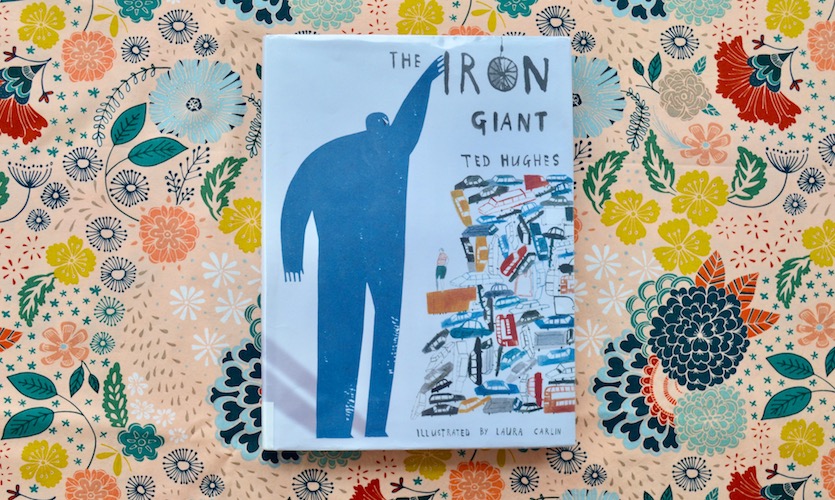
I confess that until I found The Iron Giant, by Ted Hughes, illustrated by Laura Carlin, at our library, I didn’t think of the movie that came out in 1999 as being based on a book. But of course, it was. And naturally, the book is better.
The author is actually a poet, which didn’t surprise me at all, since much of what makes the story so compelling is the poetic way in which it is told. In the version we read, which came out in 2010 (the original story came out in 1968), the illustrations sometimes include part of the text from the story, which is attention-getting and even moving at times. With repetition and descriptions that use sensory vocabulary in an incredible way, the story slides in for a home run.
As I read it, I was thinking how very different it is from the movie, and about what makes the story so good.
